Use the AI as a Test Bench, Not Just an Opponent
Choose a move for yourself, then compare it with the hint. If your move gives away a corner, undo it and try a quieter square. The value of AI practice is not starting game after game; it is getting immediate evidence about one decision.
Choose difficulty by the skill you want to practice
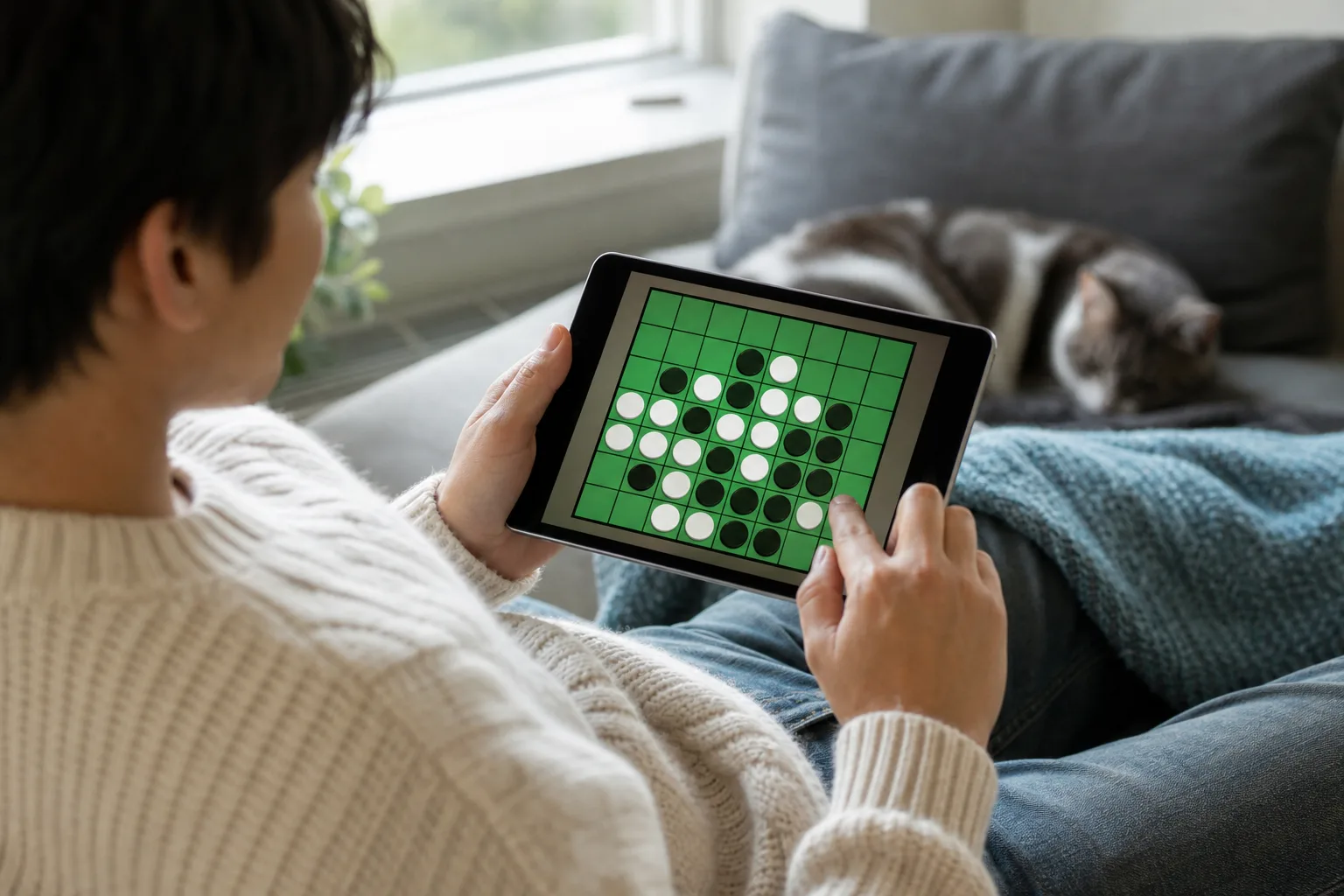
Use the beginner level while learning how each bracket works. Once you are studying corners and mobility, raise the level so obvious opportunities are punished more consistently. If you spend most of a game unsure why a square is legal, step down a level; repeated losses to deeper search will teach less.
Look at the hint only after choosing your own move
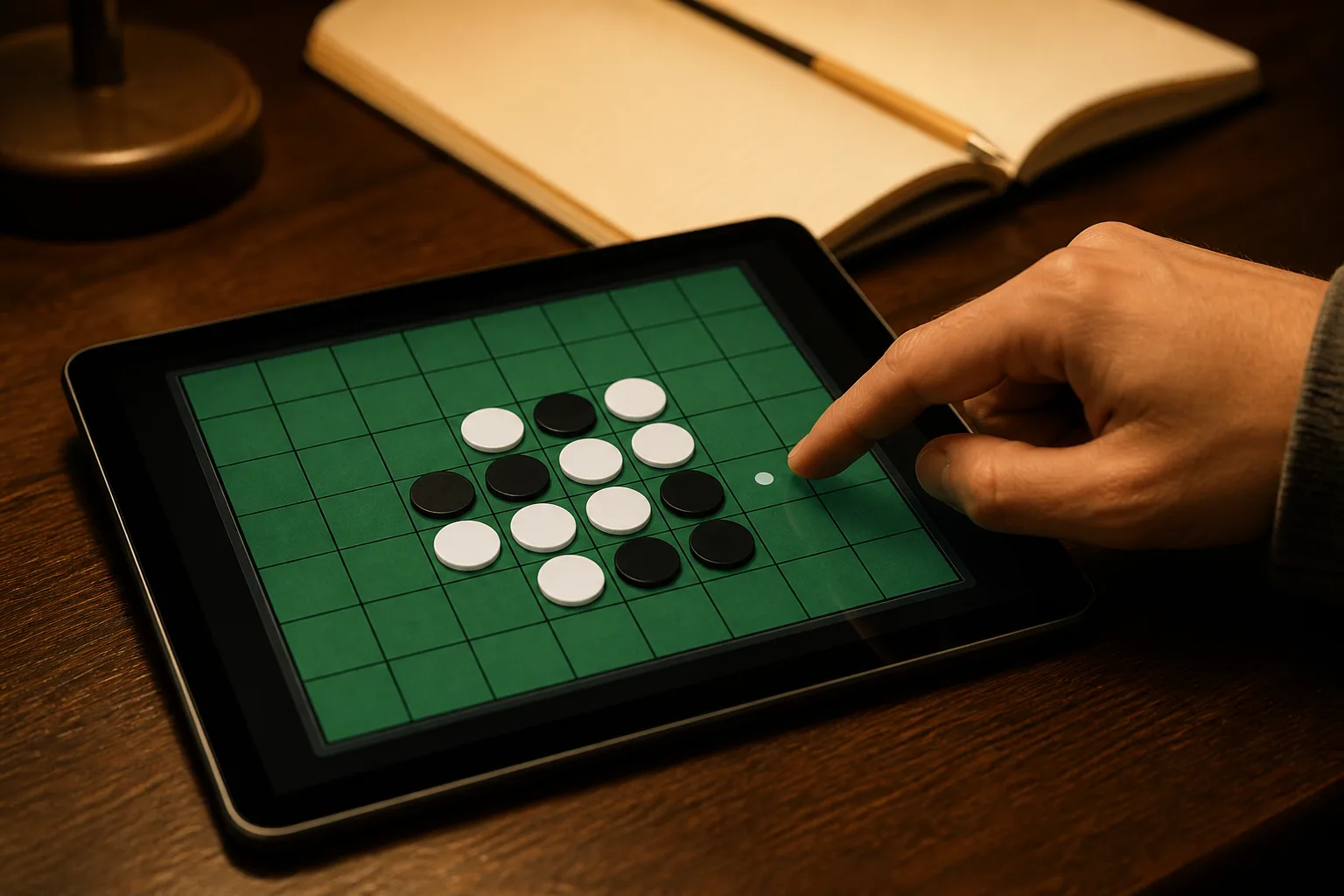
Name your candidate first and give a reason: take a corner, avoid an X-square, or leave the opponent fewer legal moves. Then open the hint. If it differs, do not memorise the answer. Undo and test both moves, then record the contrast: “Mine flipped four discs but gave five replies; the hint flipped one and left only two.”
A useful review needs only three positions
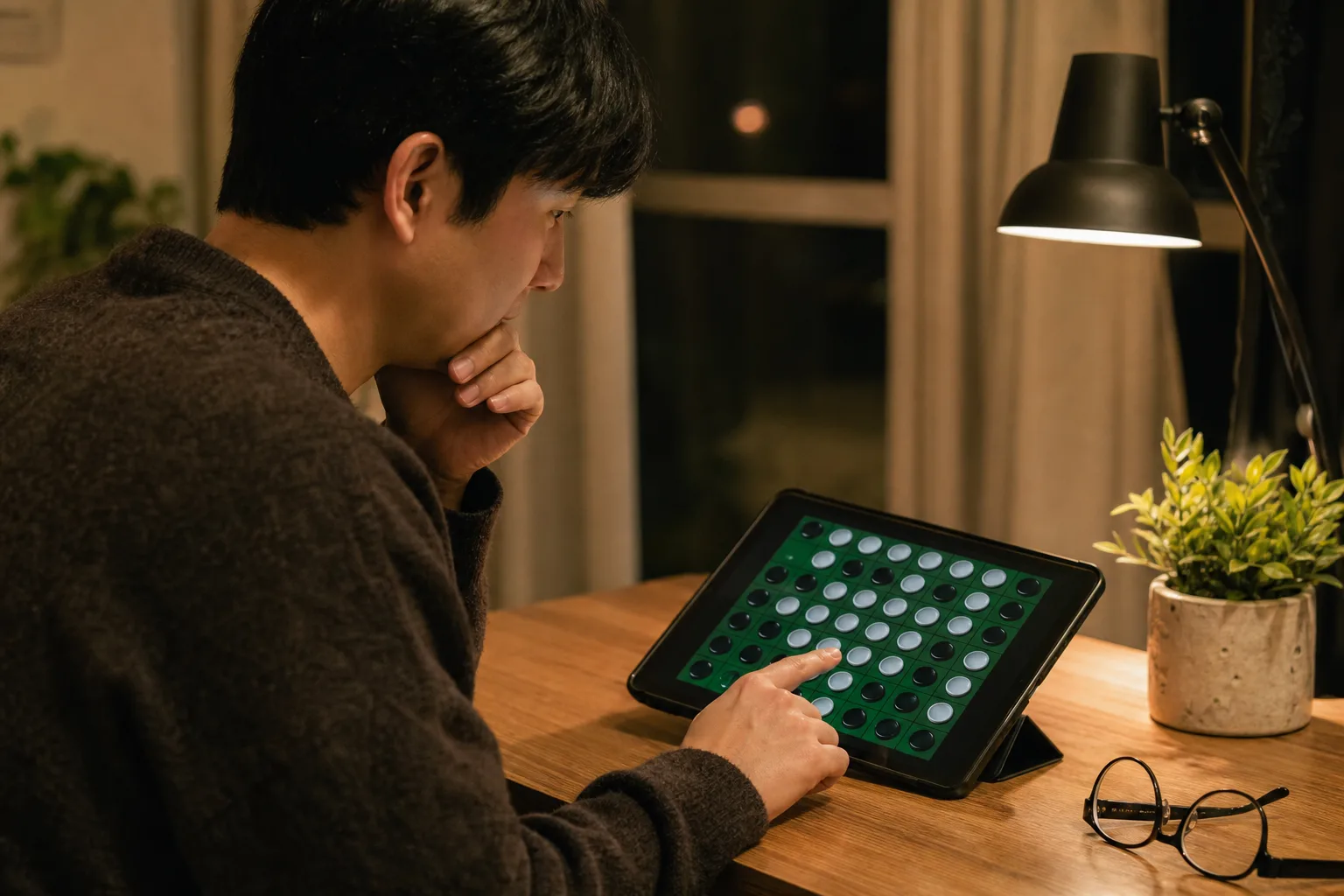
Find when a corner first became legal, who was forced to pass first, and how the final empty squares were divided. At each turning point, pause before revealing the next move and choose again. Keep one sentence for the next game, such as “b2 gave away a1,” rather than the vague “I played the midgame badly.”
Beginnertrace every bracketed line
Advancedcompare corners and mobility
Hintcheck after choosing a candidate
Replayfind the corner, pass, and endgame